Freedom From Overdrinking Blueprint
A practical, private way to break the evening drinking cycle — without labels, shame, or relying on willpower alone.
The Freedom From Overdrinking Blueprint combines behaviour change, clinical hypnotherapy, and practical tools to help you feel more in control of alcohol — at your own pace, without labels or public accountability.
Start My BlueprintCreated by Tansy Forrest, clinical hypnotherapist and author of Ten Steps to Drink Less and Live Well.
FEATURED IN:

This is for you if...
✅ You drink most evenings — even on the nights you told yourself you wouldn’t.
✅ You’re not looking for a label or a clinical programme.
✅ You’ve tried Dry January, “just weekends,” or “only two glasses” — it works briefly, then life happens.
✅ You want to sleep better, feel clearer, and stop waking up disappointed.
✅ You want to do this privately.
😔 When Drinking Is No Longer Fun…
I’m going to guess something about your evening.
The day is done and something in you finally exhales. Then without deciding to, you reach for a glass. In that moment, honestly, it helps. It always has.
The problem isn’t the first glass. It’s what comes after.
The second that follows before you’ve really thought about it. The heaviness when you wake at 3am. The low-level tiredness that follows you through the next morning, not quite a hangover, just not quite you usual self. Then you that quiet thought that arrives before the coffee has even kicked in: why did I do that again?
Maybe you’ve been carrying that thought for months, maybe longer.
You are not drinking in the mornings, not missing work and from the outside, everything looks fine. You have a responsible job, people depending on you and your life generally held together.
But you know that you, deep down that you drink more than you’d like to. Most evenings, probably and you have tried to change it.
Like in January, you had a month off. Then you tried just on weekends. Only two glasses.
It works for a while, but then a hard week arrives, or a difficult conversation, or just life happens and the bottle is open before you’ve really decided to open it.
And every time the pattern comes back, it takes something with it.
The energy you’d like to have, the sleep you’re not quite getting, the 3am wake-up that’s been there for longer than you’d care to admit.
I want to say something clearly here: this is not a character flaw.
You are not failing. What you are dealing with is a pattern that the brain has learned to run on autopilot and patterns like this don’t respond well to willpower alone.
That’s what this programme is for.
🌉The Reason it keeps coming back
Here’s something I’ve noticed in over a decade of working with people on their drinking.
Most people who want to cut back are not short of motivation. They have tried more than once, they know their reasons and they are genuinely committed to changing. However, still the pattern reasserts itself.
The reason isn’t weakness, it is that evening drinking is a habit and habits live in the automatic part of the brain, not the decision-making part.
That’s why you can want to change something, understand exactly why you should change it, but you still find yourself doing it anyway. Knowing what to do and being able to do it reliably are different things especially when you’re tired, stressed, or at the end of a long day.
Information alone doesn’t break a habit and neither does motivation. Not when the brain has spent months, or years, reaching for the same thing at the same time of day.
What works is a method that reaches the habit at the level where it’s actually running. That is what the Blueprint is built to do.
🌅What life looks like on the other side
I want to tell you what people experience when they go through this process.
One of the first things many people notice is sleep. Actually restful sleep, the kind where you wake up and feel like you’ve had it. The 3am waking starts to fade. You get to the morning feeling ready for it, rather than already behind.
Then energy. Real energy, earlier in the day, that doesn’t depend on coffee to hold it together.
Then skin, mood , a clearer head. For many people, these changes begin within the first few weeks, quietly, in ways you notice before anyone else does.
Then something underneath all of that starts to change too.
The low-level anxiety that’s been sitting under your evenings — the flat, unsettled feeling that’s there before the first glass and back again by morning begins to lift. Not all at once, but gradually.
The evenings themselves change, not because you’ve banned yourself from drinking, but because the pull isn’t as strong anymore. You’re making a choice, rather than following a pattern. And that difference changes how the whole evening feels.
The Freedom From Overdrinking Blueprint
What changes when you have the right tools
Evening drinking feels automatic
You understand your pattern and have a plan for it
You rely on willpower when cravings hit
You have tools that work when you're tired
You wake up tired and quietly disappointed
You wake up properly rested and in a better mood
You don't know what to do when you slip up
You recover quickly without it becoming a derail
You're managing this alone, in private
You have a structured method — still privately, still on your terms
INTRODUCING
The Freedom From Overdrinking Blueprint
The Blueprint is a 14-lesson online programme built on the same clinical method I use in private practice, that combines evidence-based behaviour change with clinical hypnotherapy recordings.
The book gives you the method. The Blueprint helps you live it.
My book, Ten Steps to Drink Less and Live Well, sets out the method clearly. But I know from years of clinical work that understanding something and actually being able to do it are different things. My Blueprint bridges that gap.
The Blueprint is guided, but not public. You are not left with a book and good intentions. You get a structured path, practical exercises, hypnotherapy recordings, and on-demand support from an AI guide trained on the course and book material — all designed to help you apply the method in real life, at your own pace, without any live calls or public commitments.
Why this works when other approaches haven’t
Most approaches to drinking less rely on the same tools: tracking, targets, rules, and willpower.
Those things have a place. But they work on the conscious mind — the part that decides and plans. And that’s not where the evening drinking pattern actually lives. The pattern runs deeper than that.
The Blueprint works in three layers,
Awareness. You’ll understand your pattern clearly — what’s driving it, when it takes over, and why it keeps reasserting itself despite your best intentions. Understanding the pattern properly changes your relationship with it.
Tools. You’ll build a practical plan for the specific moments the habit lives in — the evening danger zone, the stress that arrives at the end of the day, the cravings that feel urgent and then pass. Real tools, built for real situations.
Hypnotherapy. You’ll work directly with the subconscious mind — the part that runs the old habit without consulting you first. The recordings in the Blueprint don’t just help you relax. They create the kind of deep-level change that the thinking mind can’t reach on its own.
This is why the combination works when individual approaches haven’t.
Knowledge changes what you know. The hypnotherapy changes what you do automatically.
What’s inside the Blueprint
Here’s how the programme is structured — not as a list of lessons, but as a journey from stuck in the pattern to genuinely free of it.

STAGE 1
Understand why the evening habit keeps taking over
- What moderation means
- The evening autopilot
- Your personal triggers
We start by making sense of the pattern. You’ll understand what the moderation research actually shows (there is more evidence for this approach than most people realise), map the specific shape of your own habit, and give yourself permission to pursue moderation on your own terms, rather than accepting that the only answer is to stop completely.

STAGE 2
Feel the early wins in your body
- Physical health & energy
- Sleep
- What changes and when
Physical health improvement is typically the most common goal cited by people who want to cut down — ahead of everything else. This stage is where we start building motivation that lasts. You will learn what actually happens to your body when you cut back what changes in the first week, the first month, and beyond. Sleep, energy, skin, mood. These are the anchors you return to throughout the programme.

STAGE 3
Build your emotional toolkit
- Values and self-awareness
- Emotional regulation
- Managing the evening danger zone
The single biggest challenge I find with clients is typically not cravings or social pressure but emotional regulation. Dealing with emotions like stress, anxiety, tiredness and difficult feelings that make the habit feel necessary. This is where we do the most important work. You will build a practical toolkit for the specific moments that have been driving specific patterns: the end of the working day, the kids-in-bed window, the evening overwhelm.

STAGE 4
Handle cravings without panic
- What cravings actually are
- Identify your overdrinking triggers
- Strategies to deal cravings
A craving usually behaves like a wave, it builds, peaks, and passes. The skill is learning how to stay with it long enough for that to happen. This stage gives you the neuroscience behind why cravings pass, various techniques I use with clients in clinical practice. As well as practical strategies to reduce how often cravings arrive in the first place.

STAGE 5
Set limits that work in real life
- The Alcohol Moderation Action Plan
- Practical tools
- Taking alcohol-free breaks
This is the fundamentals part — what unit guidelines actually mean in real drinks, the Alcohol Moderation Action Plan and the tools that make “just one or two drinks” feel like a genuine choice rather than a restriction. We also cover how to take alcohol-free periods without it feeling like a punishment.

STAGE 6
Recover from slips without giving up
- Lapse vs relapse
- The HALT framework
- Getting back on track after a lapse
A slip is not a failure but it is information. This stage covers the difference between a lapse and a relapse, how to use the HALT framework when things go sideways, and how to get back to your plan quickly, without the shame spiral that turns a single bad evening into a bad week.

STAGE 7
Your future, on your terms
- Self-care strategies
- Values alignment
- Create your own Future Focus Map
The final stage connects where you’re going with why it matters. You’ll work through the self-care model, align your values with your choices, and create your own Future Focus Map that you can return to whenever things get hard.
Hypnotherapy tracks included
Throughout all seven stages to reinforce what you learn I have included 10 clinical hypnotherapy recordings, timed to support each phase of the journey.

About the hypnotherapy
You might have questions about the hypnotherapy part, thats fine most people do.
Hypnotherapy isn’t about being put under, losing control, or being made to do something against your will. In every session, you are awake, aware, and in full control throughout. What the audio recordings create is a calm, focused state — one where the subconscious mind is more open to new patterns than it is during ordinary waking life.
That’s why I have included this crucial element to drive behavior change, in this programme.
You can know everything there is to know about why you drink in the evenings and still pour a glass without really deciding to. That’s the habit running on autopilot. The hypnotherapy recordings work on that layer, the one the conscious mind can’t reach through thinking alone.
There are 10 recordings in the Blueprint. You listen to them in your own time, privately, using headphones. Each one is around 20-30 minutes. They’re placed throughout the programme at the moments they’re most useful.
Private by design
A lot of people who join the Blueprint are doing this quietly. They haven’t told their partner, their friends, or even their GP. Nobody knows how much they drink, and they’re not ready to change that.
That’s completely fine and that is what this programme is designed for exactly that.
You work through the lessons entirely in your own time. You listen to the hypnotherapy recordings privately, using headphones, whenever it suits you. There are no live group calls, no check-ins, no one expecting you to show up at a particular time.
No one needs to know you are here.
Your personal guide
Instead of a public community, the Blueprint includes an AI guide trained on all of the course and book material. It’s available around the clock, entirely privately.
Ask it anything — about what you’ve just learned, how to handle a difficult evening, what to do when a craving hits at 10pm. Every answer is grounded in the Blueprint method, my book material and all my alcohol moderation resources.
You get expert-level support whenever you need it, without having to share your experience publicly or wait for a scheduled call.
Why learn from me?
About me
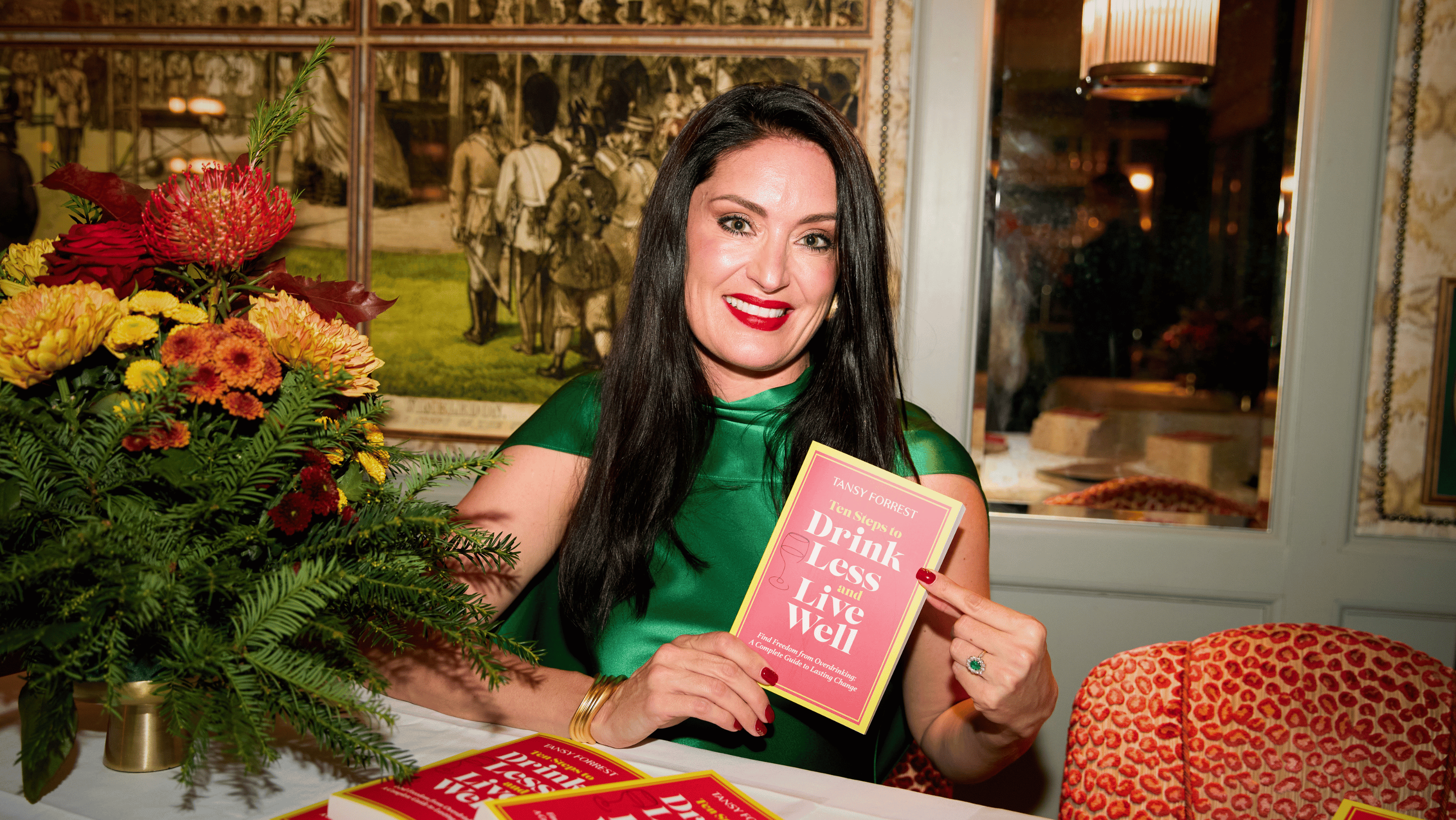
I’m Tansy Forrest. I’m a qualified clinical hypnotherapist — Dhyp, MNCH — and the author of Ten Steps to Drink Less and Live Well.
I wrote that book because I could see a gap. Many people don’t want to be told they must hit rock bottom or give up alcohol forever. They want a clear, compassionate way to change the pattern they’re already worried about. The book is the method. The Blueprint is the implementation.
I spent years working as a head of department. Busy, responsible, outwardly fine. And privately, I was dealing with stress and grief and using wine in the evenings to cope — in a way I understood but couldn’t seem to change.
Hypnotherapy changed that for me. And it changed the course of my career. I trained, built a private practice, and have spent over a decade helping people break the same pattern I once had.
I work with high-functioning adults who want to drink less without quitting completely, without labels, and without being treated as though they’re in crisis. That’s who this programme is for. And it’s work I take seriously, because I’ve been on the other side of it.