How to Drink Less Without Quitting: The Complete Guide
By Tansy Forrest, Dhyp, MNCH, BA (Hons), PGCE, MA — Clinical Hypnotherapist & Author of Ten Steps to Drink Less and Live Well

Tansy Forrest is a clinical hypnotherapist with over a decade of specialist experience in alcohol moderation. She is the author of Ten Steps to Drink Less and Live Well (Synergy Publishing, 2025) and creator of the Freedom from Overdrinking Blueprint. Her YouTube channel has more than 190,000 subscribers across the UK, US, Canada, and Australia. In a small anonymous survey of 10 past clients, respondents reported meaningful reductions in alcohol consumption, and 90% said they would recommend her methods to a friend or colleague.
In this guide
- Can you really drink less without quitting?
- Who this guide is for
- Is moderation safe for you?
- Step 1: Discover your Why
- Step 2: Assess where you are now
- Step 3: Tune in to your core values
- Step 4: Identify your triggers
- Step 5: Set clear limits and boundaries
- Step 6: Take regular breaks from alcohol
- Step 7: Deal with lapses, not with shame
- Step 8: Rewire your mind with hypnotherapy
- Step 9: Build a life that supports moderation
- Step 10: Create your Future Focus Map
- What if moderation is not working?
- What about Naltrexone or The Sinclair Method?
- Frequently asked questions
Can You Really Drink Less Without Quitting?
Yes. Many people can drink less without giving up alcohol completely, especially if they are overdrinking but are not physically dependent on alcohol. Cutting down on alcohol safely is realistic for that group, and this guide is written for them. In other words, you can cut down drinking, reduce alcohol, or build a moderate drinking plan without deciding that you will never drink again.
The key is not simply trying harder. Most people have already tried that. What helps is a structure you can actually live with: clear limits, alcohol-free days, an understanding of your triggers, a plan for difficult moments, and support for the habits that sit underneath the drinking.
That is what this guide gives you.
Drinking less without quitting does not mean being vague, hoping for the best, or relying on willpower every evening. It means learning how to make alcohol a smaller, less automatic part of your life, while still leaving room for a glass of wine at dinner, a drink at a celebration, or a beer on a summer evening if that is what you genuinely want.
How to drink less without quitting: the short version
- Decide what “less” means for you this week.
- Track what you drink before trying to change everything.
- Set clear limits before the first drink.
- Build in alcohol-free days.
- Identify your triggers: stress, reward, boredom, social pressure, loneliness.
- Plan what you will do when a craving appears.
- Treat lapses as information, not failure.
- Get support if you keep sliding back into old patterns.
If you are trying to cut down drinking, reduce alcohol, or create a moderate drinking plan without stopping completely, this guide will help you start with structure rather than self-criticism.
Who This Guide Is For
This guide is for you if you often drink more than you meant to, have tried to cut back before, and do not want to stop drinking entirely, but know something needs to change.
You may not relate to the word “alcoholic”. You may be functioning well, keeping up with work, family, friends, and responsibilities. From the outside, everything may look fine. But privately, you might be tired of waking up disappointed, anxious, foggy, or annoyed with yourself for doing the same thing again.
Many people reach this point after trying to cut down on their own. That does not mean they have failed. It usually means they need a clearer framework and better support.
Moderation is much harder without a framework. It becomes far more realistic when you understand what is driving the drinking and have practical tools to work with.
This guide may also help if alcohol is affecting your sleep, energy, mood, relationships, or self-respect, even if you do not feel “out of control”. If you are not sure yet whether your drinking counts as too much, the guide to recognising the signs can help you work that out.
Cutting Down on Alcohol Safely: Who Moderation Is, and Is Not, For
Moderation is not right for everyone.
If you are physically dependent on alcohol, please speak to your GP or a qualified medical professional before you cut down or stop. Signs of physical dependence can include needing alcohol to feel normal, shaking, sweating, nausea, severe anxiety, or seizures when you stop or significantly reduce your drinking. These are medical symptoms and need medical support.
This guide is written for people who are overdrinking but are not physically dependent. For many people in that group, moderation can be a realistic and sustainable path. It does not require a dramatic last drink or a promise that you will never drink again. It asks for honesty, structure, and a willingness to keep learning.
If you are unsure whether you are physically dependent, err on the side of caution and speak to your GP or an alcohol support service before making changes.
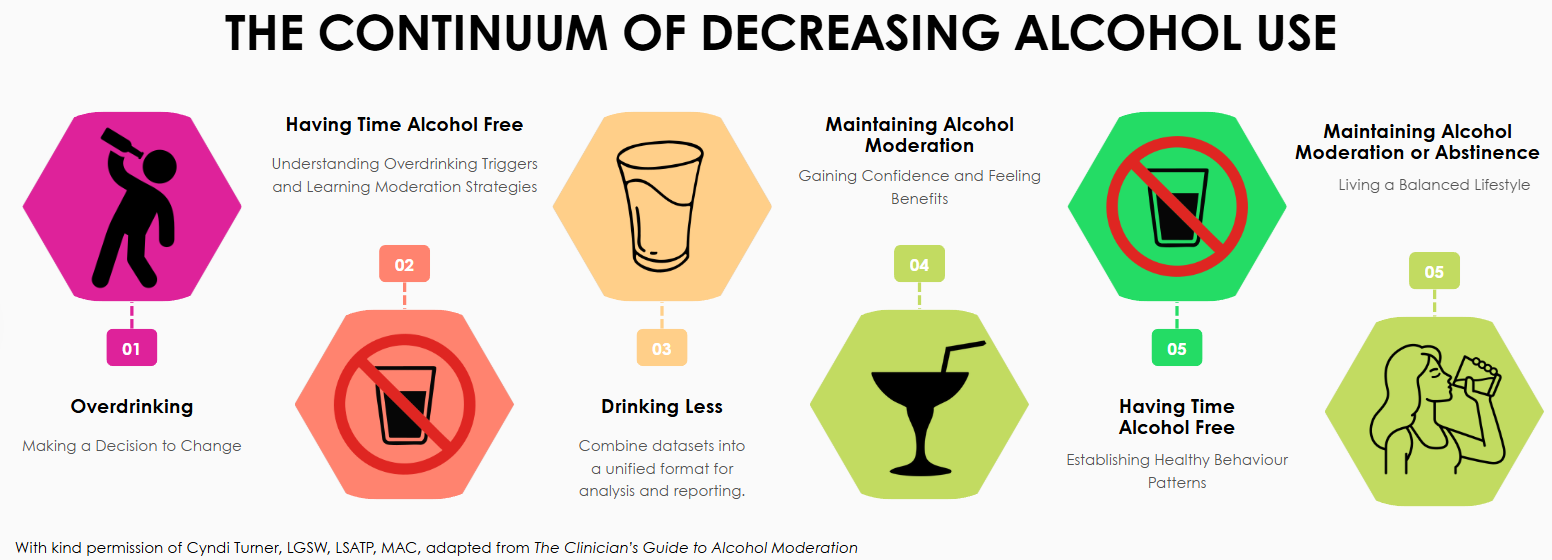
What Does It Mean to Drink Less Without Quitting?
Drinking less without quitting means creating a relationship with alcohol that feels deliberate rather than automatic.
For one person, that might mean drinking only at weekends. For another, it might mean having three alcohol-free days each week. For someone else, it might mean choosing smaller servings, setting a clear limit before going out, or taking regular alcohol-free breaks so the habit does not quietly creep back up.
Some people call this controlled drinking. I prefer to think of it as conscious moderation: drinking less, drinking less automatically, and making decisions before alcohol has already started making them for you.
There is no single perfect version of moderation. The right plan is the one that reduces harm, feels honest, and helps you live in a way that is more aligned with who you want to be. Moderation works best when it is specific enough to measure. “I’ll be better this week” is vague. “I’ll have three alcohol-free days and no more than two drinks on Friday” gives you something to work with.
A useful moderation plan usually includes:
- a clear weekly limit
- alcohol-free days
- a way to track what you drink
- a plan for triggers and cravings
- support for stress, sleep, mood, and self-care
- a compassionate way to recover from lapses
That last point matters. You do not build lasting change by shaming yourself into being better. You build it by understanding your patterns and coming back to the plan, even after a difficult night.
In This Guide
You will learn how to:
- Discover your personal reason for drinking less
- Assess where you are now
- Use your values to guide change
- Identify your emotional and situational triggers
- Set clear limits and boundaries
- Take useful breaks from alcohol
- Deal with lapses without shame
- Use hypnotherapy to support habit change
- Build a life that makes moderation easier
- Create a future focus map that keeps you moving forward
Why All-or-Nothing Is Not the Only Way
The conversation around alcohol often gets stuck between two extremes: carry on as you are, or stop completely.
For some people, abstinence is absolutely the right and safest path. But there is also a large group of people who know their drinking needs to change and do not want, or need, to give up alcohol forever.
Moderation is not permission to keep drinking in the same way. It is a structured way to drink less, understand your triggers, and make alcohol a smaller part of your life.
That shift matters. Many people find that when alcohol takes up less space, they sleep better, wake with less regret, feel clearer in the mornings, and begin to trust themselves again. This guide, drawn from Ten Steps to Drink Less and Live Well, gives you a practical framework for making that shift.
Not sure whether moderation is right for you? The guide to grey area drinking is a good place to start.
Step 1: Discover Your Why
Change is easier when you have a reason that feels stronger than the old habit.
Before you focus on cutting down, take a little time to ask yourself what you are really trying to move towards.
You might ask:
- Why do I want to drink less?
- What is alcohol costing me at the moment?
- What would feel better if alcohol took up less space in my week?
- What kind of person do I want to be in the evenings, at weekends, and in the mornings after?
Your reasons might be about sleep, energy, health, confidence, your relationship with your children, your marriage, your work, or simply wanting to feel like you are in charge of your own choices again.
Write them down. Keep them somewhere visible: your phone, a notebook by the kettle, or a card in your purse.
On the evenings when the habit starts negotiating with you, your why gives you something steady to come back to.
“When we connect to our deeper motivations, we move from external pressure to internal purpose.”
Ten Steps to Drink Less and Live Well
Try this: Write five reasons you want to drink less. Make them specific. “I want to sleep better” is useful. “I want to wake up on Saturday morning with a clear head and take the dog out before breakfast” is even better.
Step 2: Assess Where You Are Now
Before you decide where you are going, it helps to be honest about where you are starting.
This is not about labelling yourself. It is about understanding your patterns clearly enough to change them.
Ask yourself:
- Do I often drink more than I intended to?
- Have I tried to cut back before and struggled to make it stick?
- Do I use alcohol to switch off from stress, boredom, loneliness, or resentment?
- Do I sometimes wake up with regret after drinking?
- Do I find myself thinking about the first drink earlier in the day?
- Do I make rules for myself and then quietly move the line?
If two or more of these feel familiar, a moderation approach may be worth exploring.
The point is not to scare yourself. It is to stop being vague. When you can see your drinking clearly, you can make a plan that fits your real life rather than an ideal version of it.
A quick note: if stopping or cutting down causes shaking, sweating, nausea, severe anxiety, or other withdrawal symptoms, please speak to your GP before making any changes. Physical dependence needs medical support first.
Try this: For one week, track what you drink without changing anything. Note the day, amount, approximate units, situation, and how you felt before and after. This is not a test. It is information. If you are not sure about units, the alcohol units calculator will work them out.
Step 3: Tune In to Your Core Values
When you live closer to what genuinely matters to you, alcohol often starts to occupy less space.
In the book, I introduce the Values Compass. It is a practical exercise that helps you look at where alcohol currently sits in relation to the things you care about most: your health, relationships, work, family, confidence, creativity, and sense of self.
This matters because change becomes easier when it is not just about restriction.
Instead of thinking, “I am not allowed to drink tonight,” you begin to think, “I want tomorrow morning to feel different.”
One client I call Tamara had been stuck in what she described as “a negative spiral of self-medication” since her teens. What shifted was not a rule, a resolution, or another attempt to be stricter with herself. It was a conversation about her values: who she wanted to be, what she wanted her daily life to feel like, and what alcohol was getting in the way of.
Tamara now drinks moderately and feels steady in her choices. She found her compass, and it pointed her somewhere worth going.
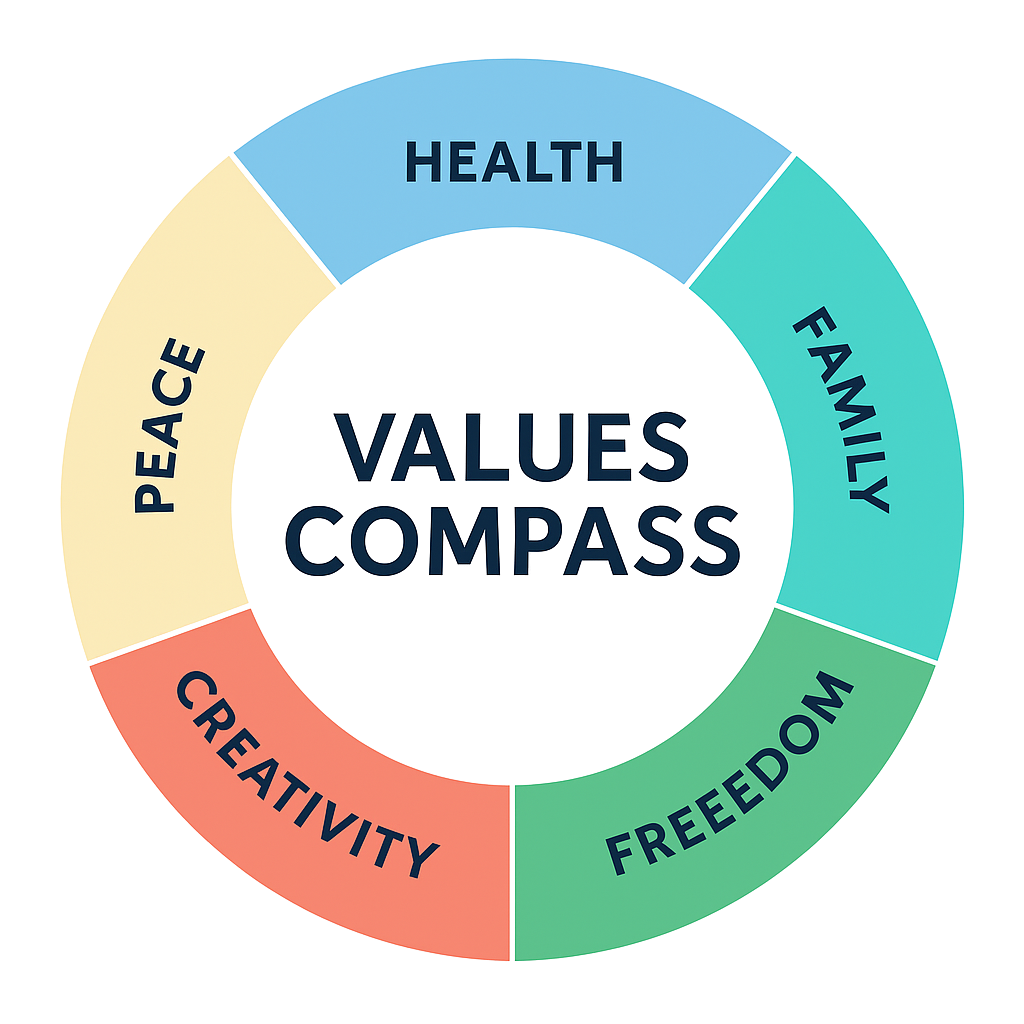
Try this: Choose three values that matter most to you right now. For each one, write down how alcohol supports it, if it does, and how alcohol gets in the way. Be honest, but do not be harsh.
Step 4: Identify Your Triggers
Most people who overdrink are not really responding to alcohol. They are responding to the moment that seems to call for it.
That moment might be the end of a hard day. It might be walking into the kitchen at 6pm. It might be Friday evening, a certain friend, a particular pub, cooking dinner, loneliness, anger, or the feeling that everyone else gets to relax except you.
Triggers tend to fall into two broad groups.
Emotional triggers include stress, anxiety, boredom, loneliness, frustration, resentment, sadness, or the need to feel rewarded.
Contextual triggers include certain people, places, routines, times of day, social situations, holidays, or the automatic pour when you get home.
One of my clients, Claire, identified both her emotional and contextual triggers and found that the mapping alone significantly reduced her overdrinking. Not because she suddenly had more willpower. Because she could finally say, “This is what I am actually responding to.”
That moment of recognition creates choice.
Try this: Keep a trigger diary for one week. Each time you drink, write down:
- where you were
- who you were with
- what time it was
- what you were feeling before the drink
- what you were hoping the drink would do for you
- how you felt afterwards
Patterns usually appear quickly. Once you know your patterns, you can prepare for them.
The mindful drinking guide on this site goes deeper into the gap between the urge and the pour, and how to use that moment as your point of change.
For some women in perimenopause, hormonal changes can make emotional triggers feel stronger or less predictable. The perimenopause and alcohol guide explains the connection in detail.
If stress is your main trigger, the alcohol and stress guide explains why the cycle keeps repeating, and what actually helps interrupt it.
If anxiety is part of the pattern, either as a trigger for drinking or as something that gets worse the morning after, the alcohol and anxiety guide looks at how the two are connected, and what actually helps break the cycle.
Step 5: Set Clear Limits and Boundaries
If you want to drink less without quitting, structure is your friend.
The important thing is to set your limits before the evening begins, not while you are already drinking. Once alcohol is in your system, it becomes much harder to negotiate honestly with yourself.
The UK Chief Medical Officers’ low-risk drinking guideline is a useful starting point: no more than 14 units per week, spread across three or more days. That is roughly six glasses of wine (175ml at 13%) or six pints of beer (4%).
From there, create your own moderation plan. Ask yourself:
- How many alcohol-free days will I have this week?
- Which days will be drinking days?
- What is my maximum on a drinking day?
- What will I drink, and what will I avoid?
- How will I track it?
- What will I do if someone offers me more?
- What will I do when I reach my limit?
Tracking is more powerful than most people expect. A simple note on your phone, a journal, or a printed worksheet can work well. Plan your units at the start of the week, then tick them off honestly each day. The free worksheets from the book include a ready-made version you can use immediately.
Joanna, a GP with a busy practice, found a solution that was almost absurdly simple. Her supermarket stocked 200ml mini bottles of prosecco. On her three allocated drinking days, she allowed herself two: one while cooking and one with dinner. The end of the meal became the full stop.
In the past, she had been tempted to finish a full bottle because her husband did not drink wine. The smaller bottles removed the decision entirely. As her tracking habit settled, she returned to running three times a week, slept better, and felt more connected in her marriage.
The limits did not shrink her life. They gave her more of it back.
Your limits might include:
- a weekly unit total
- a maximum number of drinking days
- a maximum number of drinks on any drinking day
- no drinking alone
- no drinking while cooking
- no drinking after dinner
- smaller servings only
- alcohol-free drinks between alcoholic ones
- no topping up before the glass is empty
If solo evening drinking is part of the pattern, the drinking alone guide looks at what tends to be behind it and what actually shifts it.
It also helps to have a sentence ready for social situations. You do not need a long explanation. Try:
- “I’m pacing myself tonight.”
- “I’m having a couple and then switching.”
- “I’m not drinking tonight, but I’m very happy with this.”
- “I’ve got an early start tomorrow.”
- “I’m trying to sleep better, so I’m cutting back a bit.”
Having the sentence ready means you are not inventing confidence in the moment.
For more strategies that work in real social situations, including what to do when limits get tested, read the social drinking guide.
If weekends tend to be where the plan comes apart, the binge drinking guide explains why the Friday pattern forms and how to interrupt it.
If the festive season is a particular pressure point, whether that is office parties, Christmas Day, hosting or New Year's Eve, the drinking less at Christmas guide covers each scenario with a practical plan.
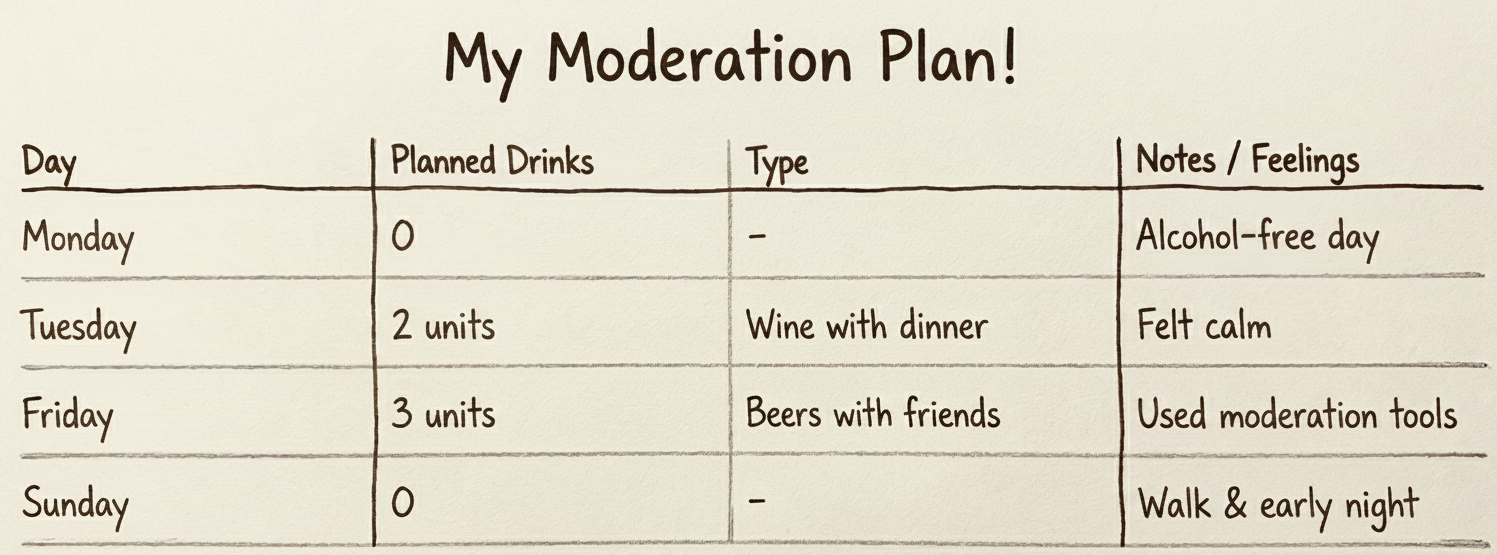
Try this: Choose your limits for the next seven days only. Do not try to plan your whole future. Make the plan specific enough that you will know whether you followed it.
Step 6: Take Regular Breaks From Alcohol
Abstinence may not be your long-term goal, but alcohol-free breaks are one of the most useful tools in moderation.
Even a seven-day or thirty-day break can help you notice your tolerance, interrupt the routine, and remember what clear mornings feel like.
A break is not proof that you must stop forever. It is a way to gather information.
It also gives you information. You notice when cravings arrive. You notice which routines feel strange without alcohol. You notice what is actually hard.
One client I call Rob was a week into an alcohol-free period when a friend arrived unannounced with a case of cold beer. He had not felt a craving all week. The moment the beer appeared, it hit hard.
He excused himself briefly and had a few quiet words with himself.
“Get stuffed, cravings.”
“Come on, Rob, you can do this.”
“I will not back down. This is my plan and I am sticking to it.”
Then he opened an alcohol-free beer, had a good dinner, and the urge passed within minutes.
Later, he said: “Giving myself a pep talk really helped give me a boost at a vulnerable point.”
That was not random willpower. It was a rehearsed response, prepared in advance for exactly that kind of moment.
Cravings can feel urgent, but they do pass. Having words ready means you do not have to think clearly at the moment when thinking clearly is hardest.
The breaks in Step Six of the book are not about punishment or dramatic gestures. They are about creating enough space to remember what your baseline feels like, so that moderation becomes a genuine choice rather than a default setting.
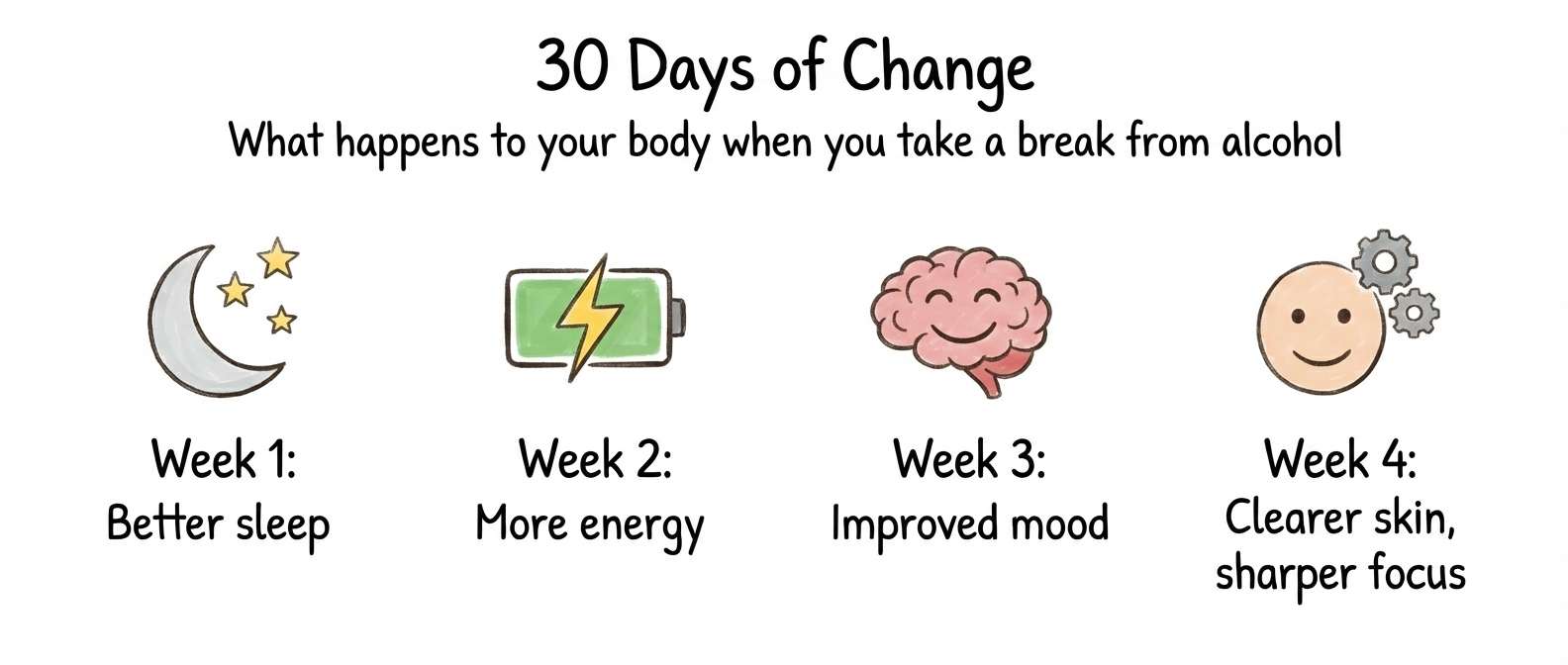
Try this: Plan one alcohol-free stretch. It could be three days, seven days, or longer. Decide in advance what you will drink instead, what you will say if someone questions it, and how you will handle your usual drinking time.
For a fuller guide to planning alcohol-free time, read the complete guide to taking a break from alcohol. It covers how to handle cravings, what to do with your usual drinking routines, and what to expect day by day. If the idea of a more extended break appeals, the sober curious guide explores what that shift tends to feel like. If January is your planned break, the Dry January guide has everything you need to make it stick. If October is your moment, the Sober October guide covers how to make the month count beyond the 31 days.
Step 7: Deal With Lapses Without Shame
Every single client I have worked with over the past decade has had a night that did not go to plan.
The clients who make lasting change are not the ones who never slip. They are the ones who do not turn a slip into a collapse.
In the book, I share the story of Carol, a successful entrepreneur who had made six weeks of steady progress before a lapse that genuinely surprised her.
It began with a pub lunch with her cousins. The kitchen sent out a meal that was undercooked. She sent it back, but her family were already eating, so she ended up with chips she barely touched. The staff were unhelpful. The lunch she had been looking forward to became stressful and disappointing.
On the bus home, the craving arrived. She bought another bottle of wine, drank it when she got back, and woke up feeling confused and angry with herself.
In our next session, we pieced together what had actually happened. Hunger, stress, and disappointment had all landed at once. It was a combination she had not anticipated.
She had not failed. She had discovered a new trigger.
With that information, she adapted her plan. She did not go back to her old ways.
When a lapse happens, the most useful question is not, “Why did I fail?” It is, “What was actually going on?”
Was I hungry? Tired? Stressed? Lonely? Embarrassed? Unprepared? Did I have a plan for that situation, or was I hoping I would just be fine?
A stumble becomes useful when you learn from it. Ask yourself:
- What triggered this?
- What was I feeling beforehand?
- What did I need in that moment?
- What can I change next time?
Then come back to your plan. Not next Monday. That morning.
“It is only a stumble. No need to crumble.”
One thing many people notice the morning after a lapse is a wave of anxiety that goes beyond ordinary regret. If that sounds familiar, the guide to hangxiety explains what is happening and why it is worth understanding rather than just waiting for it to pass.
If you have noticed that hangovers feel harder than they used to, the guide to why hangovers get worse with age explains what is changing in the body, and why this is often the thing that finally tips people towards making a change.
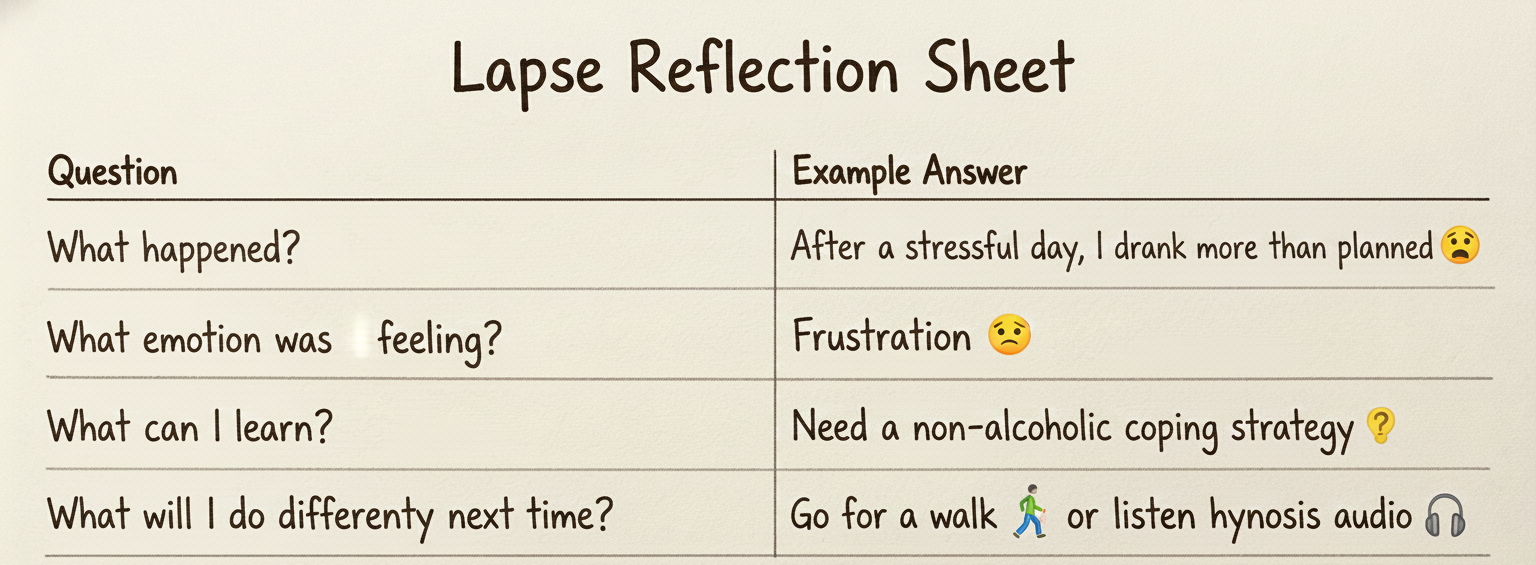
Try this: Write a lapse plan before you need it. Include a few things you will do the morning after a difficult night, such as drink water, eat breakfast, go for a walk, write down what happened, and return to your plan without punishment.
If you recognise the pattern but find it hard to change on your own, a private consultation can help you look at what is driving your drinking and what kind of moderation plan would actually fit your life.
Step 8: Rewire Your Mind With Hypnotherapy
For some people, long-term moderation becomes easier when they work with the automatic part of the drinking habit, not just the conscious decision to cut down.
You stay aware and in control throughout; this is not stage hypnosis or mind control.
Willpower operates at the conscious level. But many drinking habits are not conscious decisions by the time they happen. They are associations, routines, emotional shortcuts, and learned responses.
The glass appears before you have really thought about it. The thought “I deserve this” arrives before the plan has a chance. The urge feels familiar because your mind has rehearsed it so many times.
Hypnotherapy can help because it works with those automatic patterns. It helps you rehearse new responses, reduce stress associations, strengthen motivation, and build confidence around the choices you want to make.
In my clinical practice, clients often report reduced cravings, more ease in social situations, and a shift in how alcohol feels in relation to their identity. It becomes less central. Less charged. Less like something they are fighting, and more like something that matters less than it used to.
Hypnotherapy is not a magic fix, and I would never present it as one. It works best as part of a broader framework that includes honest tracking, clear limits, emotional awareness, and practical support.
But for many people, it helps change feel less like a daily battle.
If you would like structured support with this, the Freedom from Overdrinking Blueprint includes four hypnotherapy sessions alongside weekly action plans, one option if you would like guidance alongside the steps in this guide.
The hypnotherapy for alcohol page explains how it works in detail: what sessions involve, who it is most likely to help, and what the evidence actually says. For a deeper look at how hypnotherapy applies specifically to grey area drinking and what clients tend to notice, the hypnotherapy for drinking less guide explores this further.
Try this: Before your next usual drinking time, close your eyes for two minutes and mentally rehearse yourself making the choice you want to make. Picture it in detail: what you are drinking instead, what you say to yourself, how the evening ends, and how you feel the next morning.
Step 9: Build a Life That Supports Moderation
The clients who make the deepest and most lasting changes to their drinking tend to be the ones who also change what surrounds it.
That does not mean transforming your entire life overnight. It means noticing where life has become more depleting than nourishing.
One client I call Mariella realised that the wrong things had gradually crept up, while the right things had quietly disappeared. She was sleeping badly, saying yes when she wanted to say no, giving too much energy to obligations that drained her, and leaving very little room for things that actually restored her.
As she began to address those things, her relationship with alcohol shifted almost as a byproduct.
When your life needs less numbing, alcohol needs less of a role in it.
Think about what alcohol currently does for you. It may offer stress relief, a signal that the day is over, social ease, comfort, rebellion, reward, or a way to avoid feeling something difficult.
The goal is not to find perfect, worthy substitutes. It is to find honest ones.
That might mean a walk, a bath, a proper meal, an early night, a conversation with someone who energises you, ten minutes alone after work, or a different way to mark the end of the day.
Small changes count. In fact, they often work better because they are easier to repeat.
One area that often shifts quickly when you drink less is sleep. The alcohol and sleep guide explains what is happening and what to expect as your sleep begins to recover.
Drinking less also has a noticeable effect on the body more broadly, from digestion and bloating to energy and inflammation. The alcohol and your body guide covers what tends to change, and how quickly.
Many people are also surprised by the effect on their skin, with less puffiness, clearer mornings and better colour as sleep and hydration both improve. The alcohol and skin guide explains what tends to change and why.
Weight is often one of the first things people hope will change when they drink less. The alcohol and weight guide explains the relationship honestly, including why the picture is more nuanced than the calories alone suggest.
If you are a woman, some of what changes when you drink less has a biological basis worth understanding. The alcohol and women guide explains why the same drink can affect women differently, and why it is worth paying attention to earlier rather than later.
If you are over 40 and would like extra nutritional support while your body resets, the guide to supplements for women over 40 covers options worth discussing with your GP alongside cutting back.
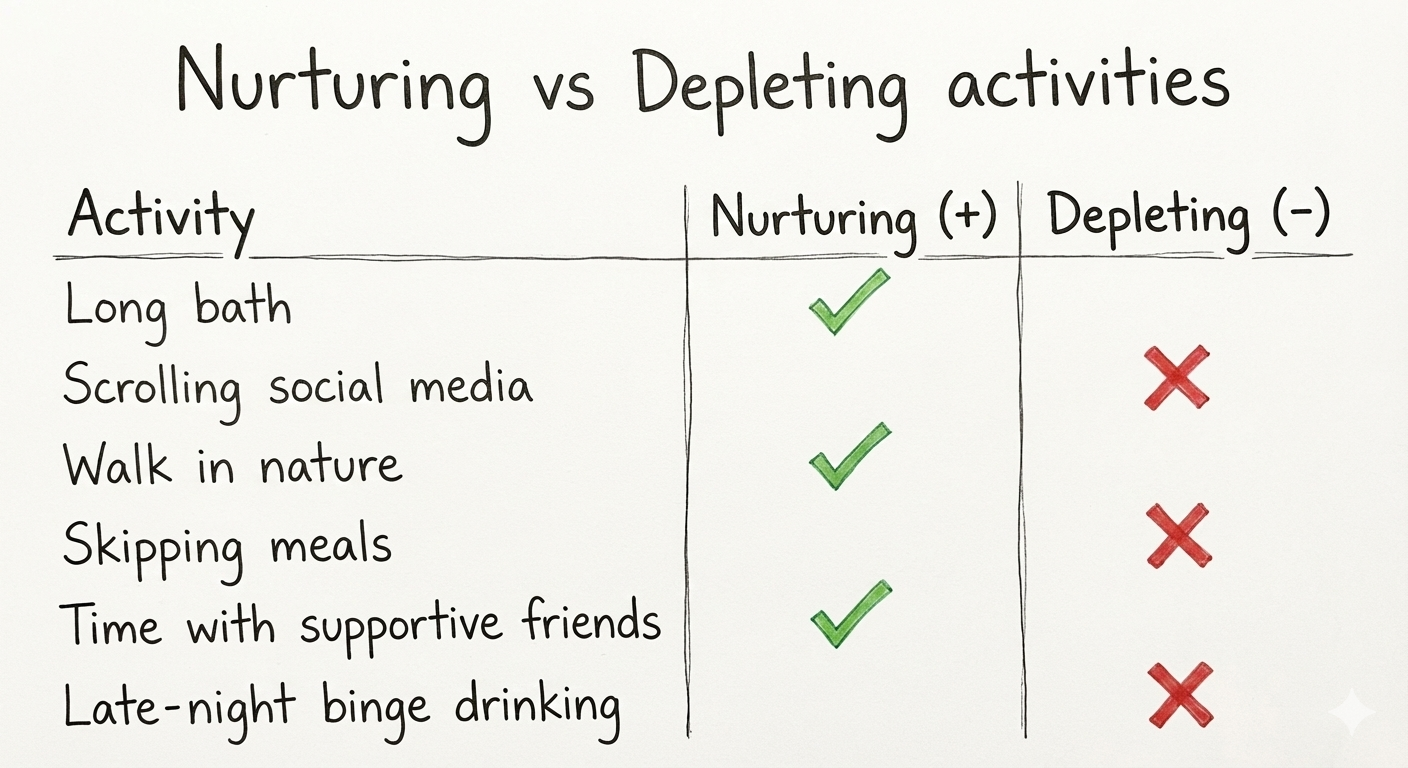
Try this: Make two lists: “What drains me?” and “What restores me?” Choose one small draining thing to reduce this week and one restoring thing to bring back.
Step 10: Create Your Future Focus Map
The final step is simple, but it is often the one people skip.
Change is easier when you know what you are moving towards.
If the whole focus is on what you are not doing (not drinking, not overdoing it, not messing up), your mind stays fixed on the thing you are trying to reduce. A future focus gives you a clearer direction.
Imagine yourself six months from now, or a year from now.
What does a typical morning feel like? How do you handle a difficult week at work? What do weekends look like? How do you socialise? What do you do when you are stressed? What does your relationship with alcohol look like, not as a rule you are following, but as an ordinary lived experience?
Make the picture specific.
Maybe you wake up on Sunday without regret. Maybe you enjoy two drinks at dinner and stop easily. Maybe you no longer spend the afternoon negotiating with yourself about whether you will drink that evening. Maybe your children, partner, friends, or colleagues notice that you seem more present.
The more specific your picture, the easier it is for your mind to move towards it.
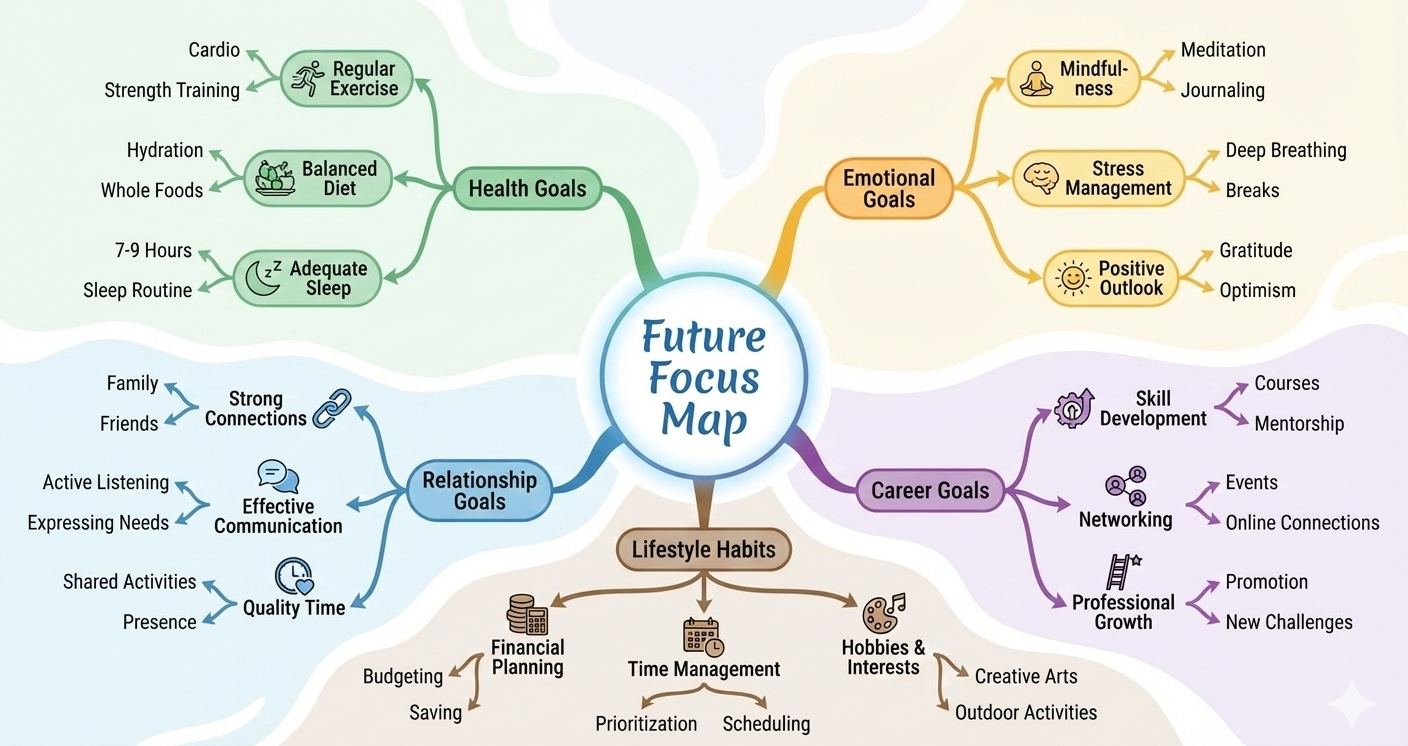
Try this: Write a short description of your life six months from now if alcohol has become a smaller part of it. Write it in the present tense: “I wake up clear-headed. I feel proud of myself. I enjoy a drink when I choose to, but I do not feel pulled along by it.”
What If Moderation Is Not Working?
If you keep setting limits and repeatedly find you cannot stay within them, that does not mean you are weak. It means the current level of support may not be enough.
For some people, the next step is a clearer moderation plan, more accountability, hypnotherapy, coaching, or a structured programme. For others, medication-assisted support such as The Sinclair Method may be worth discussing with a qualified doctor.
I write about this in Ten Steps to Drink Less and Live Well, but I am not a prescriber. If medication may be appropriate, I can refer you to a private medical provider I work closely with for assessment. Any decision about naltrexone, nalmefene, or other medication must be made by a doctor. I have a professional referral relationship with this provider.
For others, particularly where there are withdrawal symptoms, blackouts, morning drinking, or a sense of needing alcohol to function, medical or specialist alcohol support should come first.
Moderation is a valid path for many people. It is not the right path for everyone. The honest question is not “should I be able to do this?” but “what support is actually appropriate for where I am?”
If you are not sure whether you need coaching, hypnotherapy, a structured programme, medical assessment, or a combination of support, a private consultation can help you understand the next sensible step.
What About Naltrexone or The Sinclair Method?
For some people, medication-assisted support may be worth exploring as part of a drinking-less plan. In my book, Ten Steps to Drink Less and Live Well, I discuss The Sinclair Method, which involves taking medication such as naltrexone or nalmefene under medical supervision before drinking.
I am not a doctor and I do not prescribe or advise on medication. If this is something you are interested in, it needs to be assessed by a qualified medical professional who can look at your health history, liver function, other medication, and overall suitability. Where appropriate, I can refer clients to a private medical provider I work closely with, who can assess whether this route is suitable. I have a professional referral relationship with this provider.
My role is then to support the behaviour-change side: the habits, triggers, stress patterns, emotional drinking, and practical decisions that medication alone cannot address.
Medication can be a useful helping hand for some people. It is not a passive solution. The most effective change still involves understanding your drinking pattern and building a life where alcohol takes up less space.
Final Thoughts: A Kinder Way to Change
Drinking less does not require a dramatic last drink, a rock-bottom moment, or a lifetime promise of abstinence.
For many people who overdrink, lasting change begins with something quieter: honest self-knowledge, practical tools, and the willingness to keep going after the nights that do not go to plan.
You do not need to fix everything at once.
Start by noticing your patterns. Choose one alcohol-free day. Set one clear limit. Write down your why. Learn from the next difficult moment instead of using it against yourself.
The journey begins not with a grand declaration, but with a decision: to drink less and live well.
Want to Go Deeper?
Work out what you actually drink
A free calculator that adds up a typical week. Nothing to sign up for, and it pairs with the tracking in Step 2.
Read the book
Ten Steps to Drink Less and Live Well gives you the complete framework, including the exercises, client stories, and hypnotherapy approach in full.
Get the free book resources
Download the worksheets and hypnotherapy recordings that go alongside each chapter, at no cost.
Join the Freedom from Overdrinking Blueprint
A guided online programme with weekly action plans, hypnotherapy sessions, and a small private community.
Book a private consultation
For a one-to-one conversation about your specific situation.
Frequently Asked Questions
Can everyone drink moderately?
No. Moderation is not suitable for everyone.
If you are physically dependent on alcohol, or you experience withdrawal symptoms when you stop or cut down, you should speak to your GP or a qualified medical professional before making any changes.
For people who are overdrinking but are not physically dependent, moderation can be a realistic goal. The key is to approach it with structure, honesty, and support rather than relying on willpower alone.
Can I drink less without quitting forever?
Yes. Many people successfully reduce their alcohol intake without stopping completely.
This usually works best when you have clear limits, alcohol-free days, trigger awareness, a way to track what you drink, and a plan for social situations or cravings.
The goal is not to prove that you can drink. The goal is to create a relationship with alcohol that feels calm, deliberate, and manageable.
Can I drink less without AA or a 12-step programme?
Yes. AA and similar programmes are based around abstinence, which is the right path for some people, but not for everyone.
If you are overdrinking without being physically dependent, you may find that a moderation-based approach fits you better. You do not need to identify as having an alcohol problem, commit to never drinking again, or attend group meetings to make meaningful change.
What if I only overdrink at weekends or in social situations?
This is very common, and it is often well suited to a moderation approach.
Situational overdrinking can be linked to particular friends, places, routines, emotions, or expectations. Once you understand the specific trigger, you can prepare for it instead of hoping you will somehow behave differently next time.
A plan might include deciding your limit in advance, alternating alcoholic and alcohol-free drinks, eating properly before you go out, arranging how you will get home, or rehearsing what you will say if someone pushes you to drink more.
Does trying to moderate just make you want to drink more?
It can if moderation is vague. “I’ll just try to be better” is usually too loose to be helpful.
Structured moderation is different. When you have clear limits, alcohol-free days, trigger awareness, and a plan for cravings, alcohol often starts to take up less mental space rather than more.
Many people find that as tolerance reduces and confidence grows, the pull of alcohol becomes quieter.
Is hypnotherapy safe and evidence-based?
Clinical hypnotherapy is used to support habit change, stress reduction, anxiety, confidence, and behaviour change. In my work, I use it as one part of a wider moderation framework.
It is not a magic fix, and it should not replace medical care where medical care is needed. But it can be a very helpful way to work with the automatic habits and associations that often drive overdrinking.
What if I have a really bad night and feel like I have undone everything?
You have not undone everything.
A lapse is one night. It is not a verdict on your character, and it does not erase the progress you have made.
The most useful response is to ask what happened, what you can learn, and what support or preparation you need next time. Then return to your plan as soon as you can.
It is only a stumble. No need to crumble.
How do I start drinking less today?
Start small. Track what you drink for a few days, choose one alcohol-free day, and decide your limit before your next drinking occasion. The alcohol units calculator will do the counting if that part feels fiddly. Do not try to redesign your whole life in one evening. One clear change is enough to begin.
What is the difference between drinking less and controlled drinking?
Controlled drinking usually means setting clear limits around when, where, and how much you drink. I prefer the phrase conscious moderation because it includes the emotional side too: why you drink, what triggers the habit, and what you want alcohol to mean in your life.
What if I keep breaking my own drinking rules?
That is a sign the plan needs more support, not a sign you are hopeless. Look at when the rules break down. Is it stress, social pressure, hunger, tiredness, resentment, or boredom? If the pattern keeps repeating, one-to-one support, a structured programme, or medical advice may be the next step.
Can I get help to drink less online?
Yes. Online support can work well for people who want private, practical help to reduce their drinking without attending a group or committing to abstinence. Tansy offers private consultations and the Freedom from Overdrinking Blueprint for people who want structured online support to moderate their drinking.
Can medication help me drink less without quitting?
For some people, yes. Medication-assisted approaches such as The Sinclair Method may help reduce alcohol cravings or the reward response associated with drinking. This is something I discuss in my book, but it must be assessed and prescribed by a qualified doctor. I do not give medical advice or prescribe medication, but where appropriate I can refer clients to a private medical provider I work closely with. My work focuses on the behaviour-change side of drinking less: habits, triggers, emotional drinking, stress patterns, and moderation planning.
Sources and Further Reading
- NHS: Alcohol units and the UK low-risk drinking guideline. No more than 14 units per week, spread across several days, with alcohol-free days included.
- NHS: Alcohol withdrawal and treatment. Withdrawal symptoms can include sweating, shaking, nausea, anxiety, hallucinations, or seizures; medical support is important for people at risk.
- Drinkaware: How to cut down on drinking. Practical guidance on alcohol-free days, planning, and low/no-alcohol options.
- Ten Steps to Drink Less and Live Well by Tansy Forrest. Includes a chapter on The Sinclair Method and naltrexone for those exploring medication-assisted support.